
Search for anything.
Notification message.
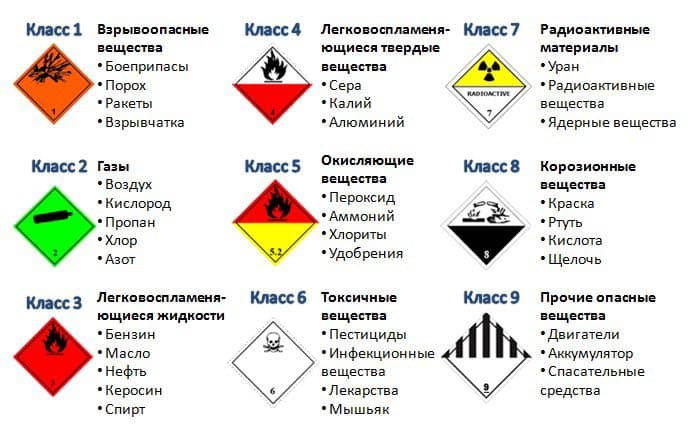
Materials that may explode or cause a fire that can lead to an explosion, as well as substances with pyrotechnic effects. Articles that can cause mass explosion, that is, an explosion that instantly ignites the entire cargo. Substances that pose a projection hazard without mass explosion. Articles that, when burning, emit radiant heat or minor explosive effects. Low sensitivity articles that present a mass explosion hazard but have a very low likelihood of transition from burning to detonation.
Primarily gases (for example, oxygen). This includes mixtures of gases, pure gases, and mixtures of several gases. A gas is a substance that at 50°C has a vapor pressure greater than 300 kPa. The main hazard is the pressure at which it is contained. Gases may be asphyxiant, toxic, corrosive, flammable. They can be: non-flammable/non-toxic; flammable and possibly toxic; chemically unstable; and toxic gases.
Flammable liquids and solids in molten state with a flash point not more than 61°C, as well as explosives liquefied in water or other liquids to create a homogeneous liquid mixture to minimize the possibility of explosion. Examples include diesel fuel, light heating oil, gas oil, and paints.
Substances that ignite easily due to friction, absorption of moisture, or heating; explosive substances that are solids; self-reactive liquids or solids. Granular, powdered, or pasty solids that can easily ignite under external factors (sunlight, a match, a spark). Articles liable to spontaneous combustion (pyrophoric substances and their liquid/solid mixtures). Spontaneous ignition occurs when heat generation exceeds heat dissipation and the auto-ignition temperature is reached. Substances that emit flammable gases in contact with water.
Oxidizing substances that readily release oxygen, sustain combustion, and may cause explosion or fire in contact with other materials. Also includes organic peroxides (derivatives of hydrogen peroxide).
Toxic substances that can cause poisoning, illness, or death upon ingestion, skin contact, or inhalation. Includes highly toxic, toxic, and low-toxicity substances, and infectious substances containing pathogens.
Radioactive materials containing radionuclides. The hazard arises from ionizing radiation (alpha, beta, gamma). These substances may be pyrophoric, corrosive, or release heat. Exposure can cause burns, hair loss, blood changes, cancer, leukemia, or death.
Corrosive substances that damage epithelium or skin on contact. They can also damage cargo, vehicles, and pose other hazards. Typically acids, alkalis, and strongly corrosive products.
Miscellaneous dangerous substances not covered by previous ADR classes. Includes fine dust harmful when inhaled, or devices that, when burning, may release dioxins, as well as flammable vapors.